

Proven Safety
Two PhasesAttenuation& Arrest
Phase 1 Attenuation
Energy absorption cassette collapses
Vehicle starts to move onto trailer floor
Trailer largely static
Over 50% reduction in vehicle speed
Phase 2 Arrest
Combined mass of vehicle & device
Friction dissipates remaining
energy of combined mass.
Pre- Impact

Phase 1 Attenuation

Phase 2 Arrest

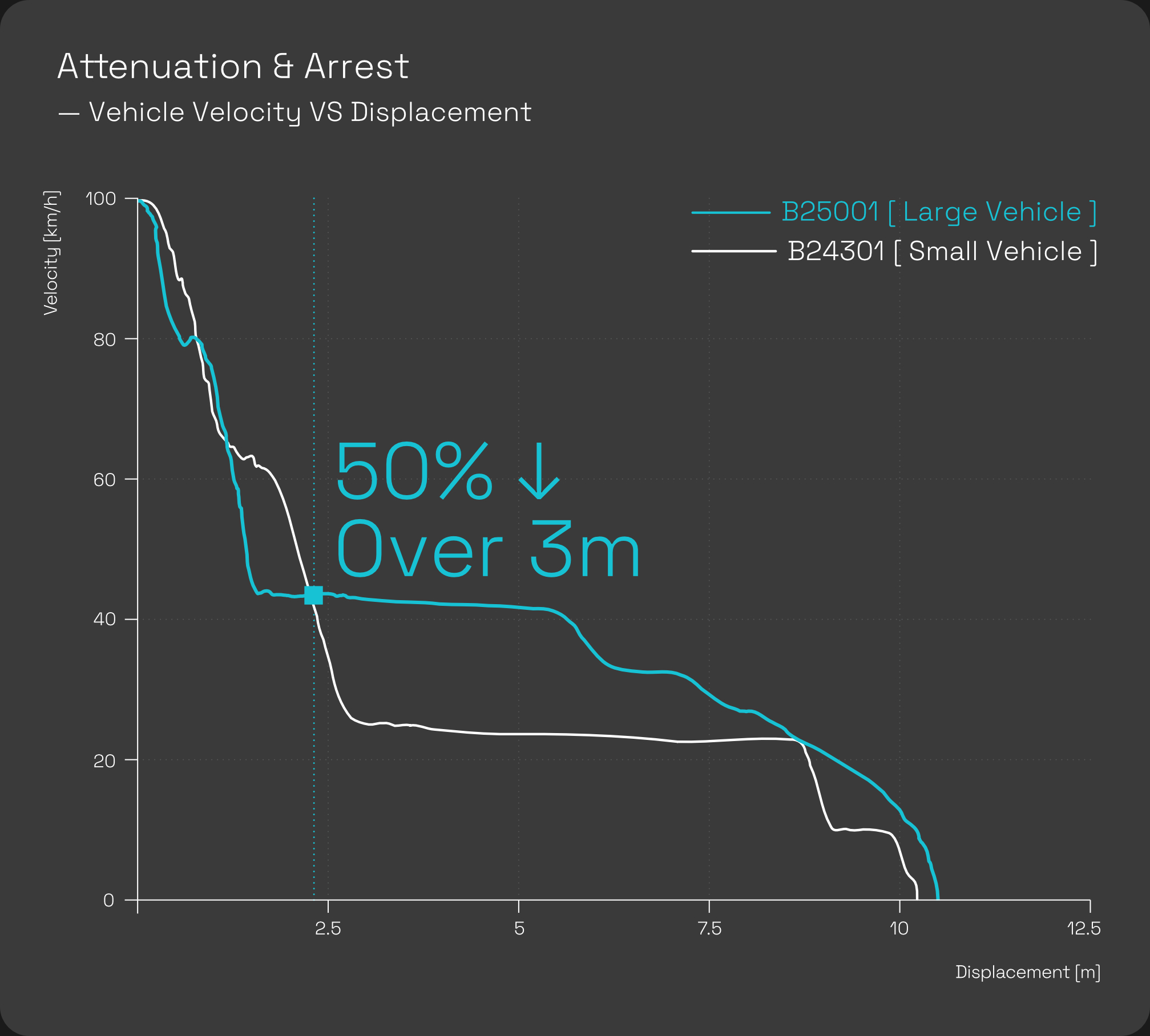
Over 50% reduction in vehicle speed in less than 3m, across all tests.
Test Level 3 (TL3), 100km/h
Large Vehicle
2270kg  100km/hr
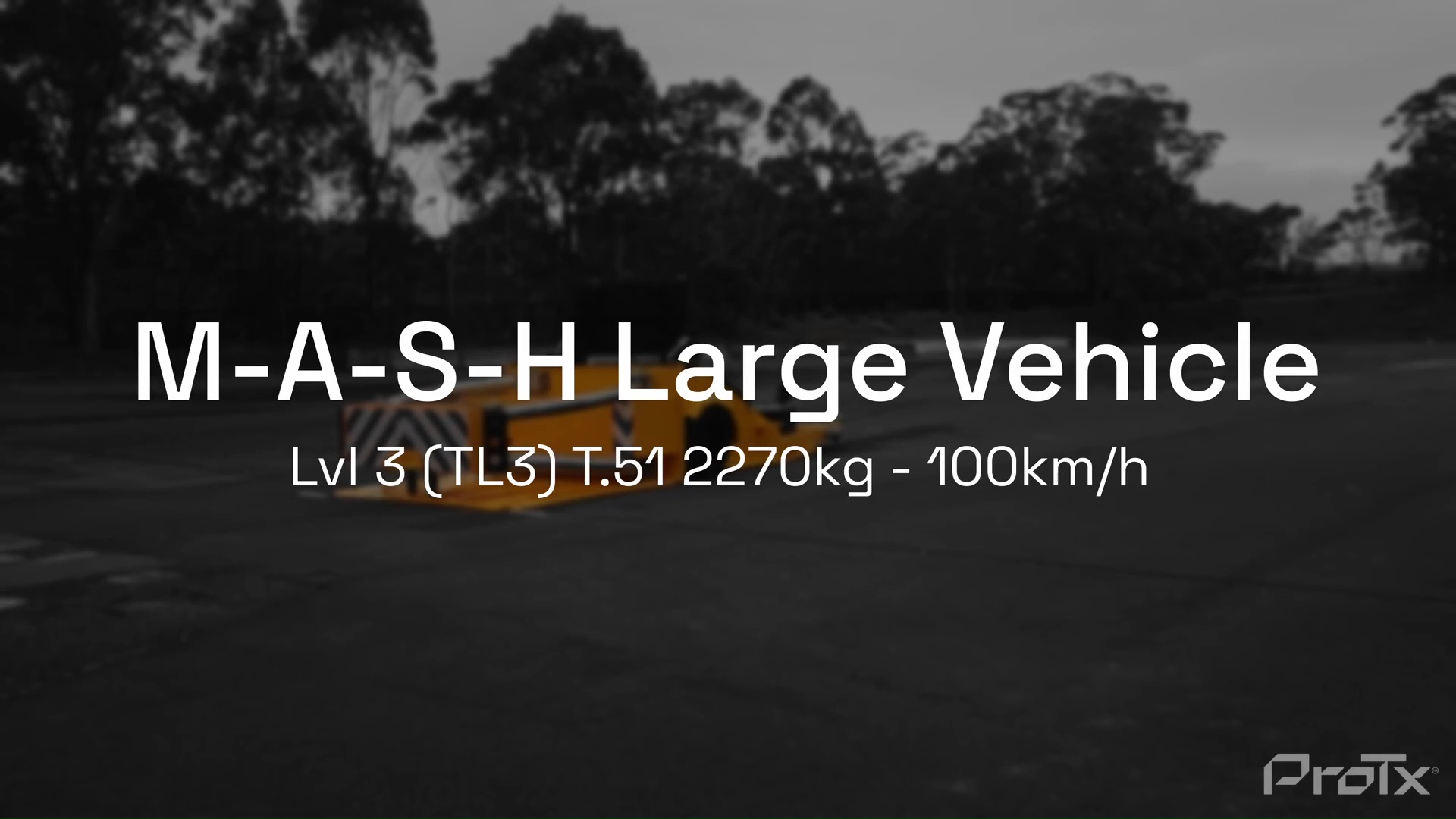
T.51 - Large Vehicle 2270kg
Impact angle 0°, Vehicle Impact Offset 0°
T.52 - Large Vehicle 2270kg Offset
Impact angle 0°, Vehicle Impact Offset 1/3
T.53 - Large Vehicle 2270kg Angle & Offset
Impact angle 10°, Vehicle Impact Offset 1/4
[ Completed ]
Test Level 3 (TL3), 100km/h
Small Car
1100kg 100km/hr
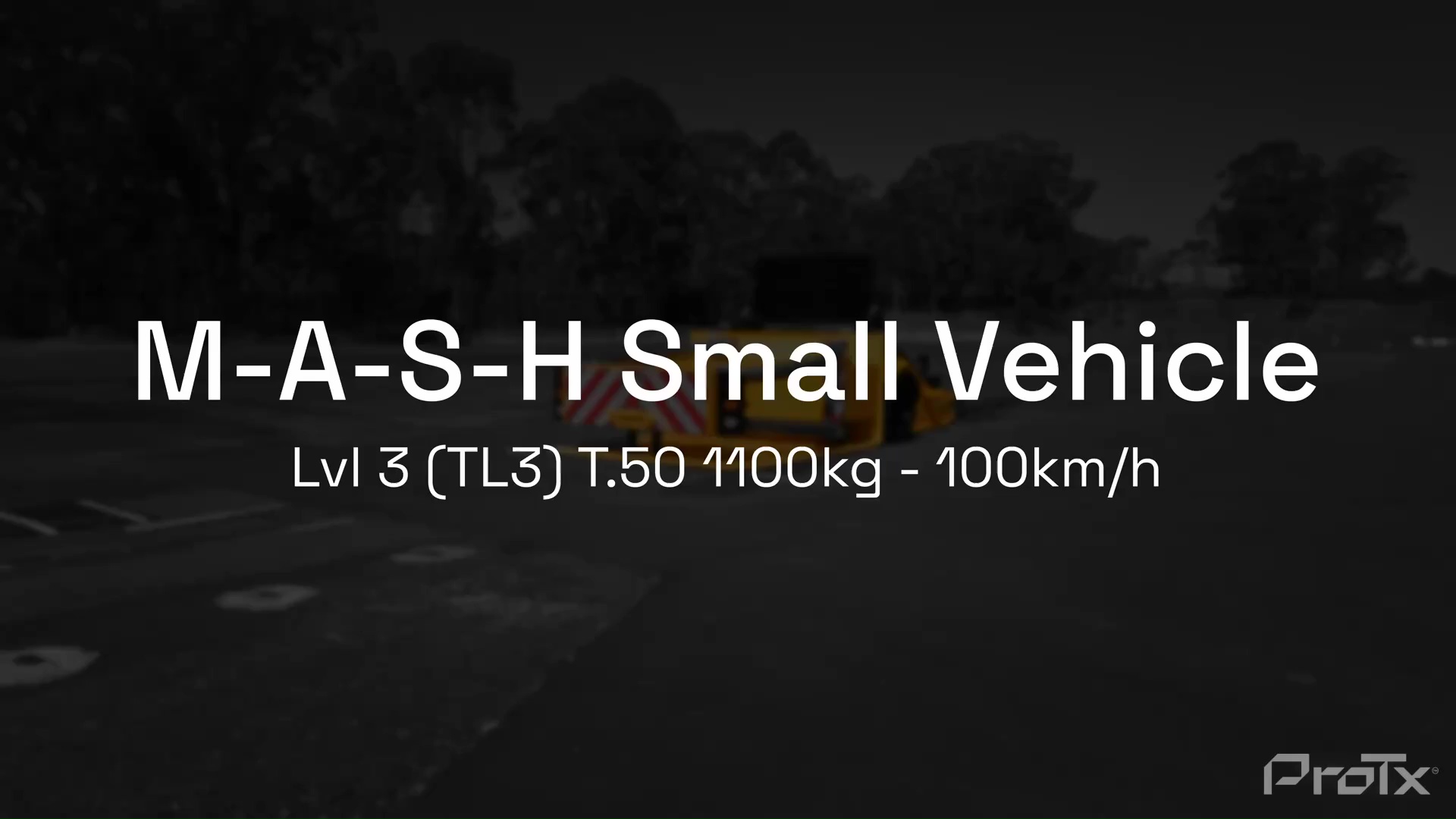
T.50 - Small Car 1100kg
Impact angle 0°, Vehicle Impact Offset 0°
[ Completed ]
SystemConditions
Conditions of use as per ASBAP CA. See download.
For static worksites only.
Towing vehicle must be disconnected and removed from safety buffer zone.
Device must be fully lowered to the ground in deployed mode.
Minimum safety buffer of 40 metres required between the device and work zone.
Shoulder and Roadside areas must be kept clear of all personnel (workers and public) through the full 40m safety buffer.
Device must be deployed minimum of 0.5m from the road edge.
RapidDeploymentVehicleArrestor
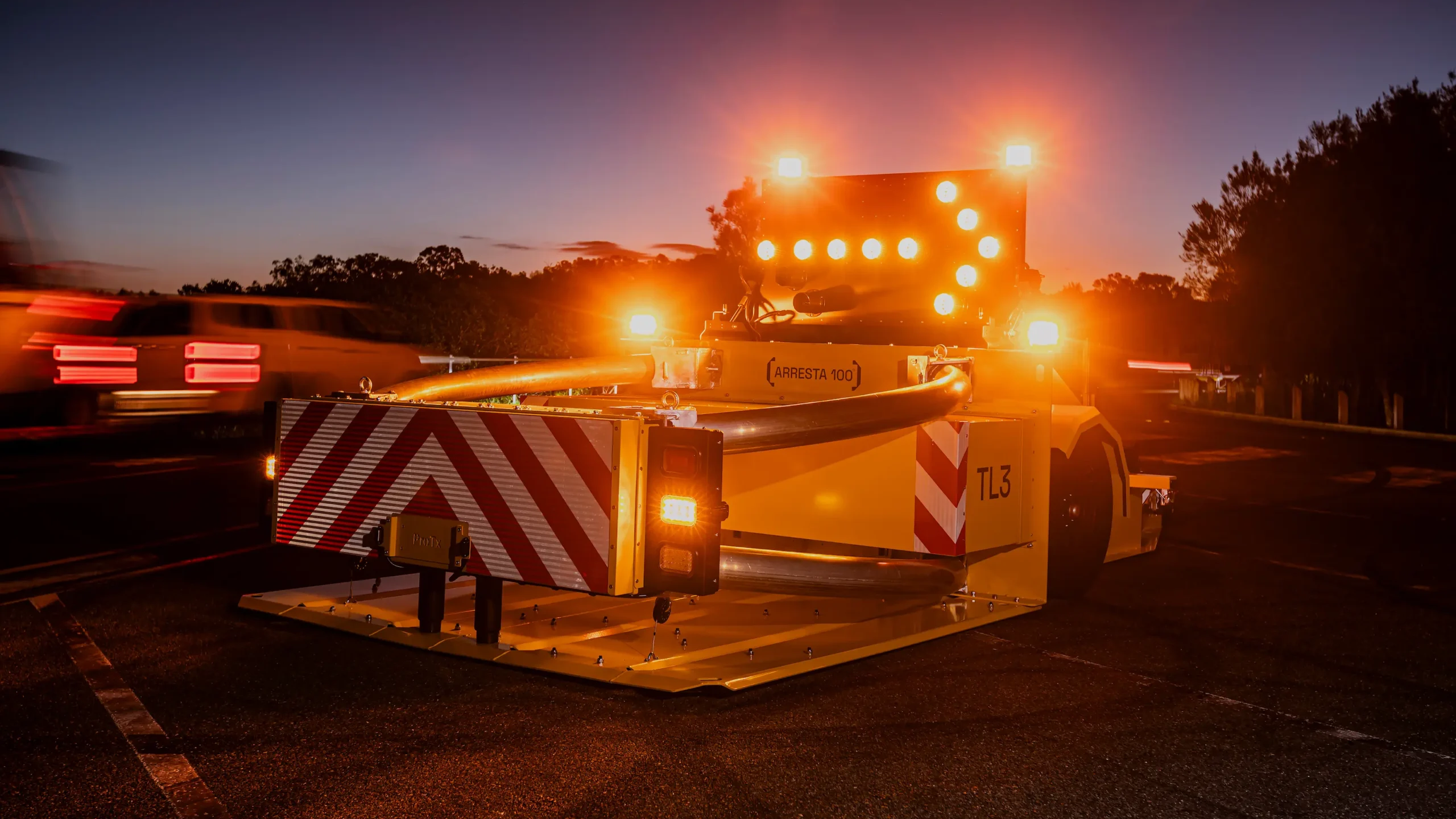
Our innovation represents a fundamental shift in road worker protection.
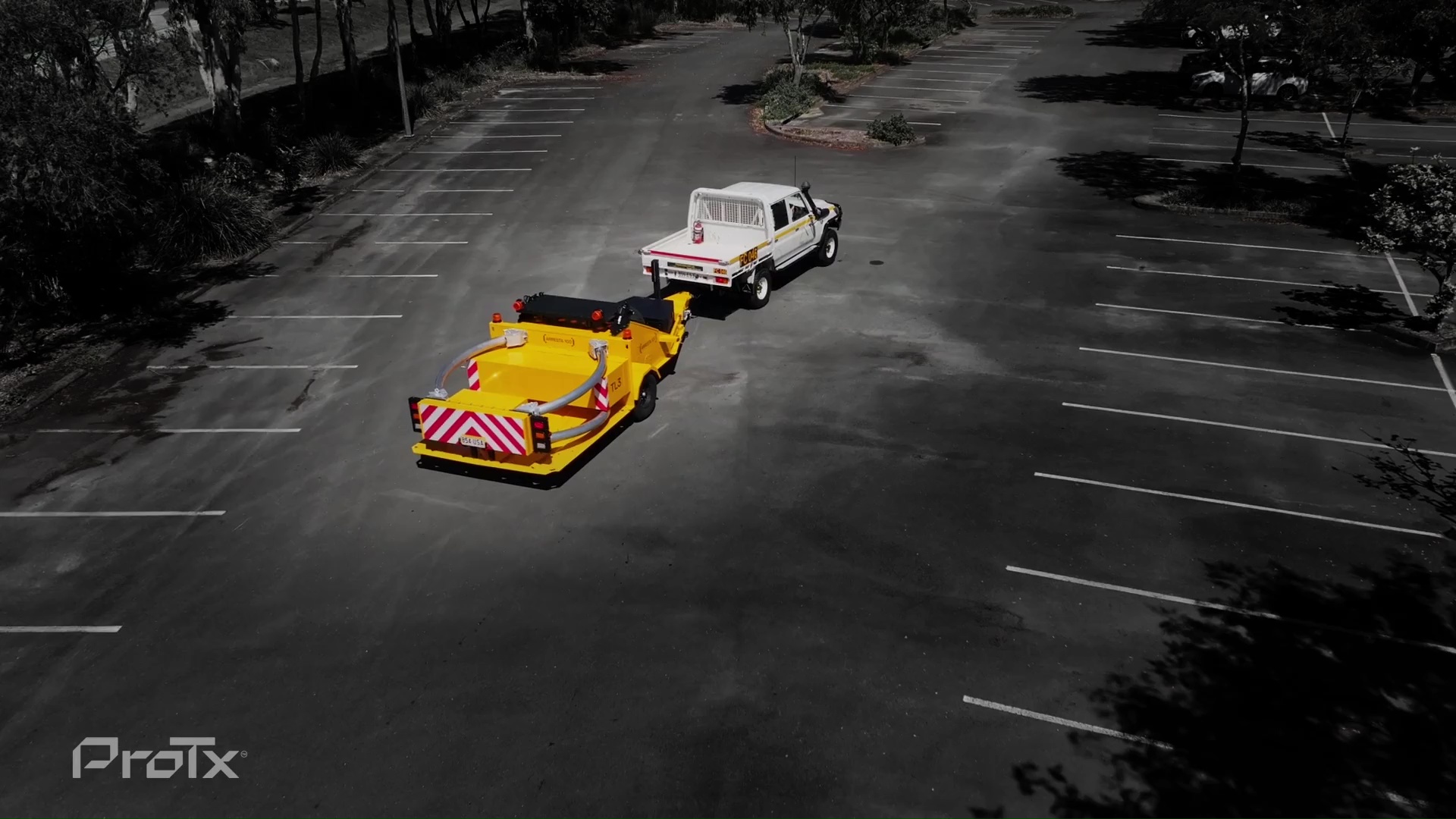
Rapid Drop & Go
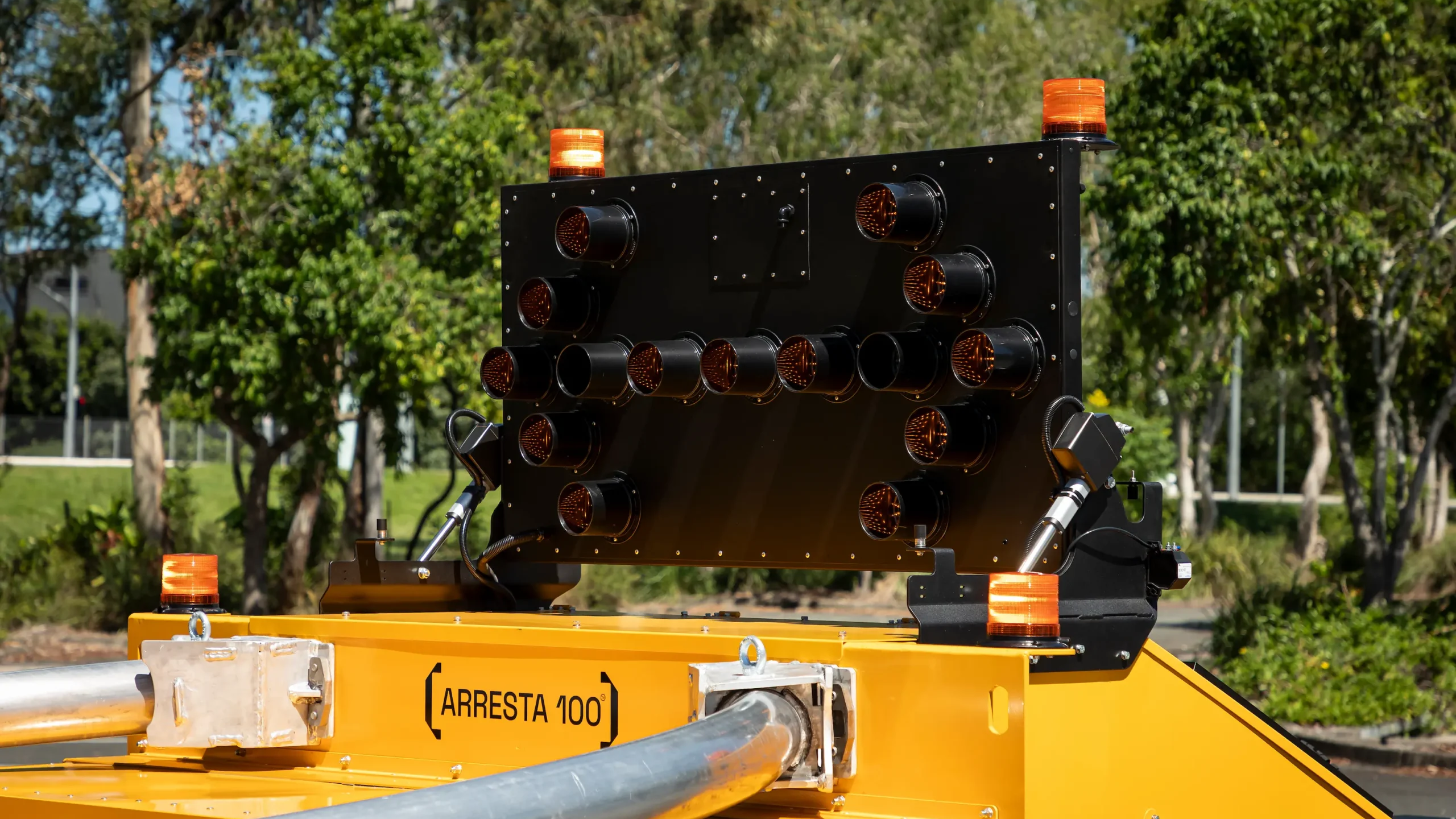
Auto Warning Lights
As you approach the deployment area, the arrow board and beacons activate automatically when you turn on the tow vehicle's hazard lights — before you step out. Or activate from the pendant with a single button. One push on and off, with easy toggle between arrow board modes.
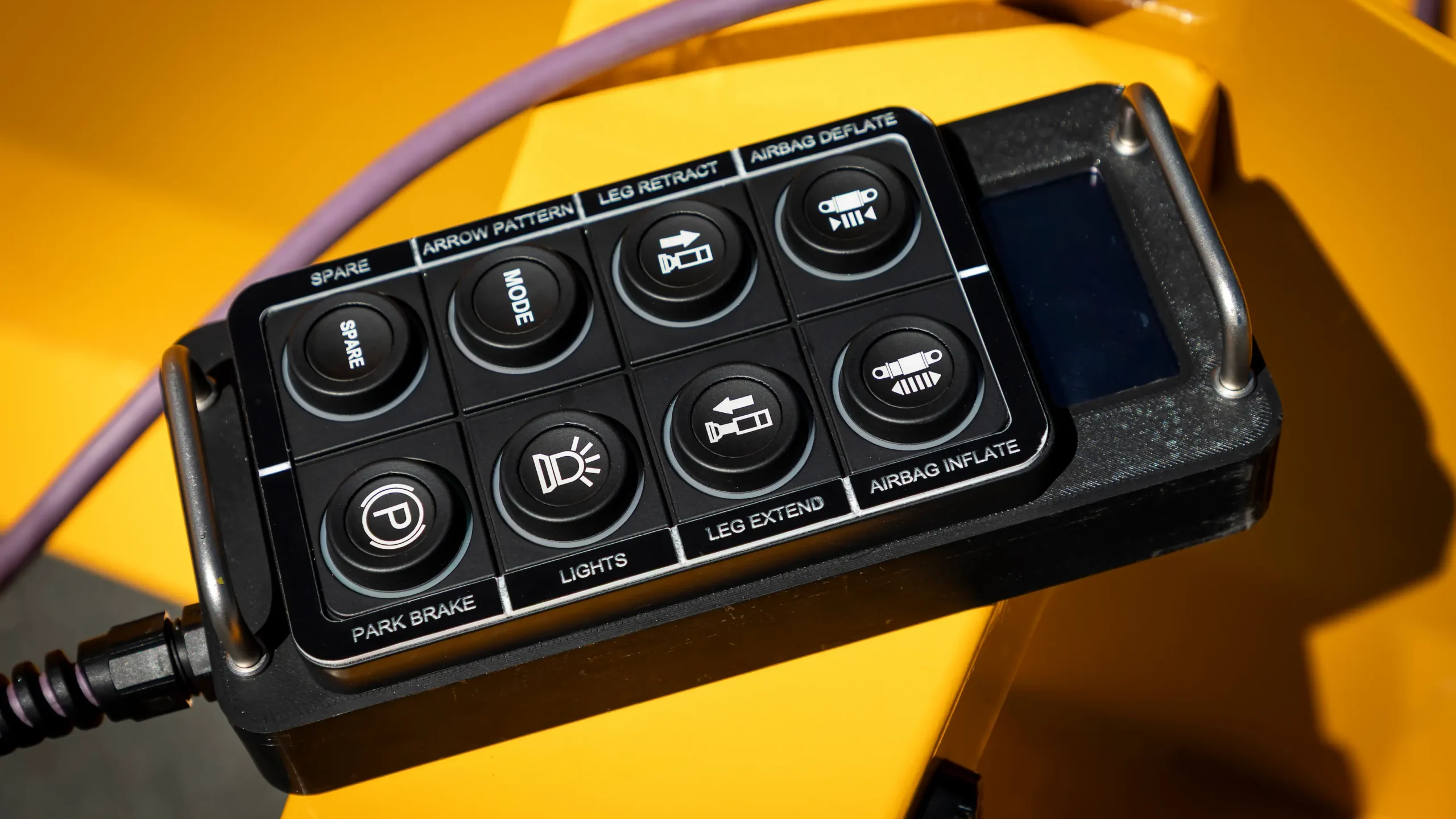
User Friendly Pendant Control
Every step of deployment is controlled from a single handheld pendant — just like a crane. Simple push button operation means anyone on site can deploy the Arresta 100 trailer vehicle arrestor at temporary static roadworks quickly and confidently. No complicated procedures.
Electric Park Brake
Before decoupling, the electric parking brake locks the Arresta 100 in position at the push of a button. A critical safety step — completed in seconds.
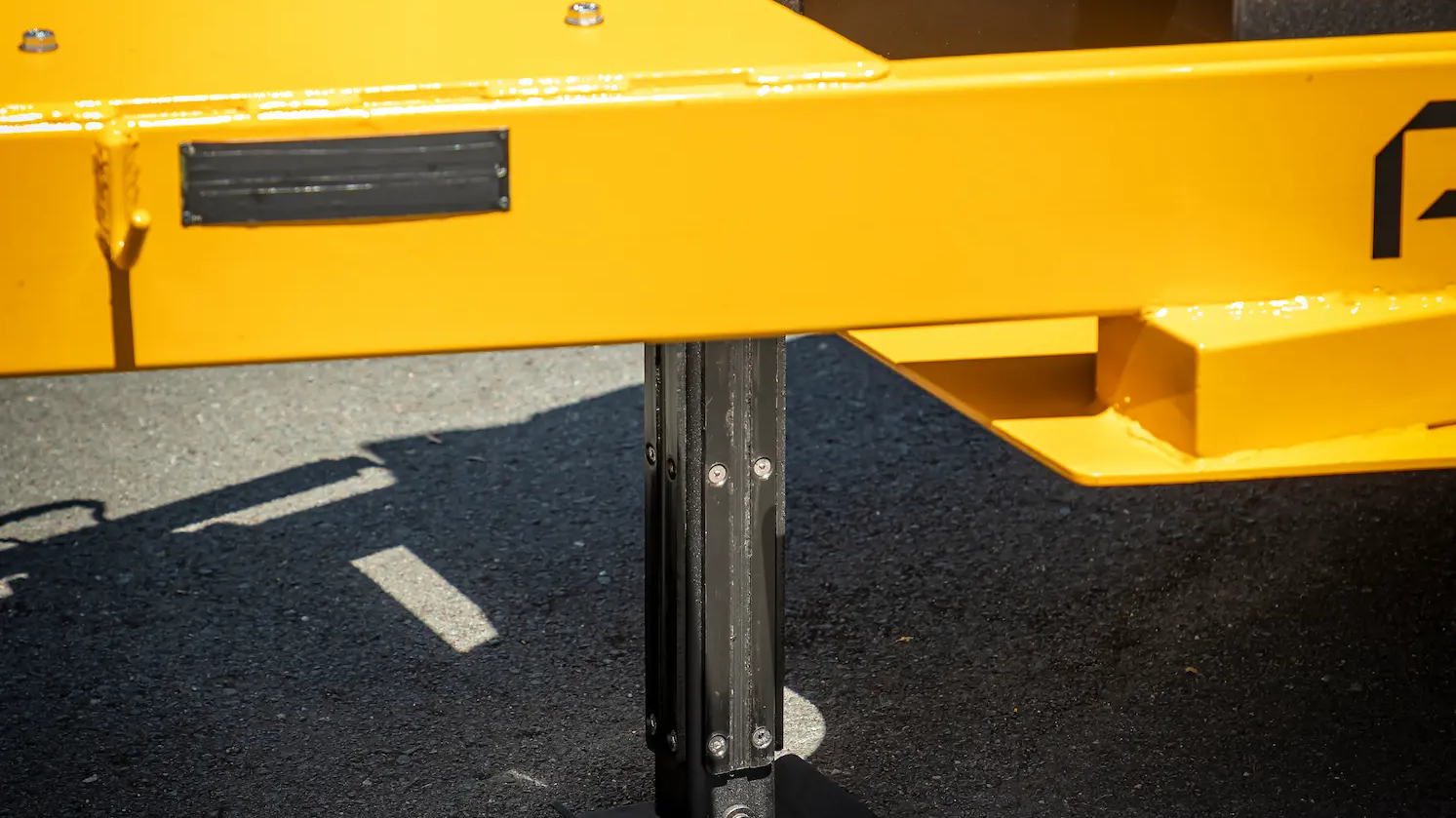
Electric Jack Leg
The drawbar leg extends and retracts at the push of a button. No manual winding. Faster and easier coupling / decoupling when deploying and recovering.
Auto Raise & Lower
Ride height sensors automatically manage the airbags — raising for tow and lowering to the ground for deployment. Automated, repeatable and easy.
The innovation of the Arresta100 creates a new category of protection that fills a critical gap in the market.
Our vision to create a revolutionary barrier technology that empowers road crews with immediate safety capabilities is now a reality.
We designed our solution specifically for temporary stationary worksites—the backbone of our road network maintenance.
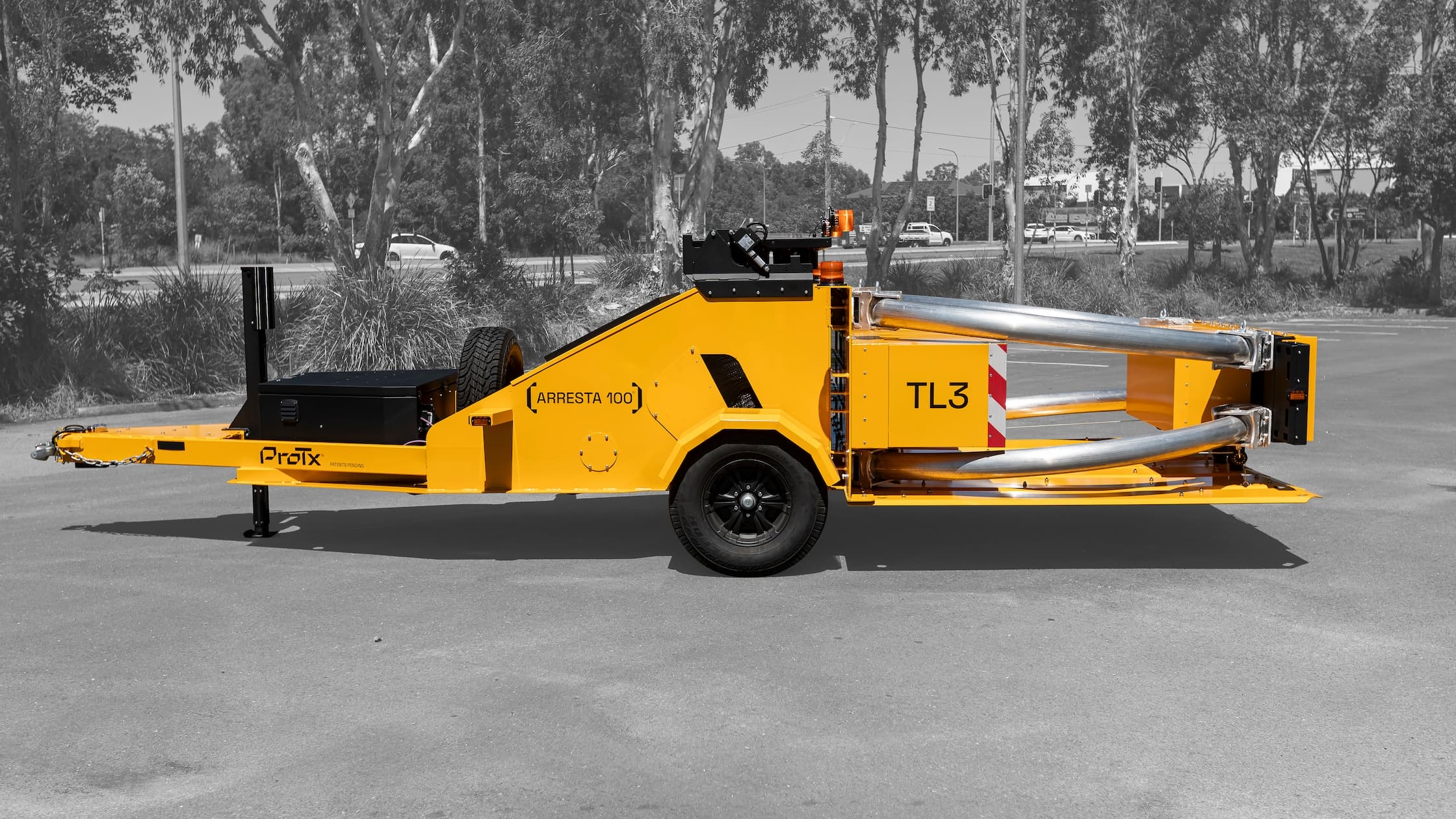
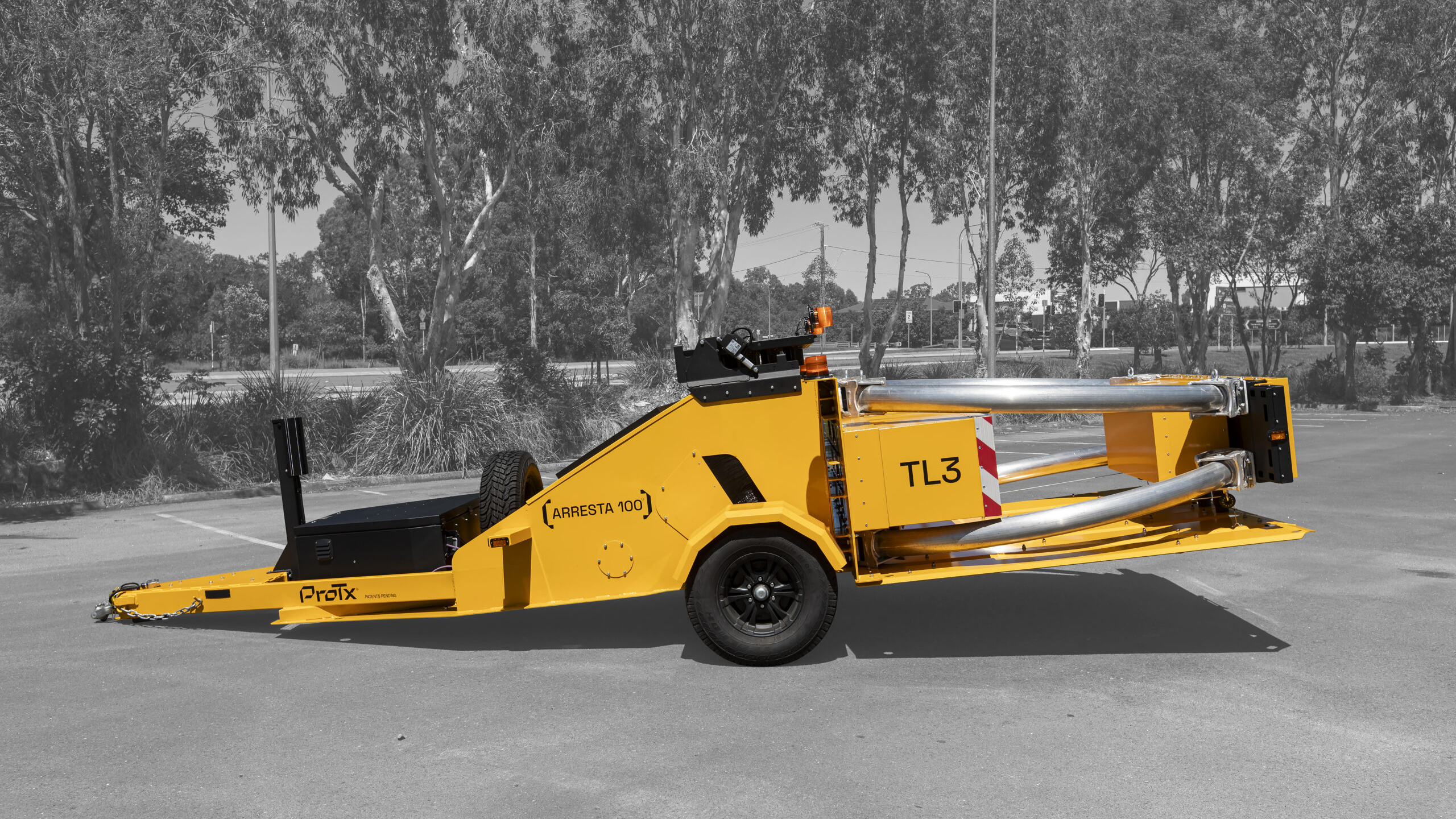
This safety system can be towed by any standard work utility vehicle, perfect for day-to-day essential services in static worksites including road repairs, utility maintenance, vehicle recovery, emergency response — locations where crews need to set up quickly and pack down just as fast.
One Device. Two Modes.
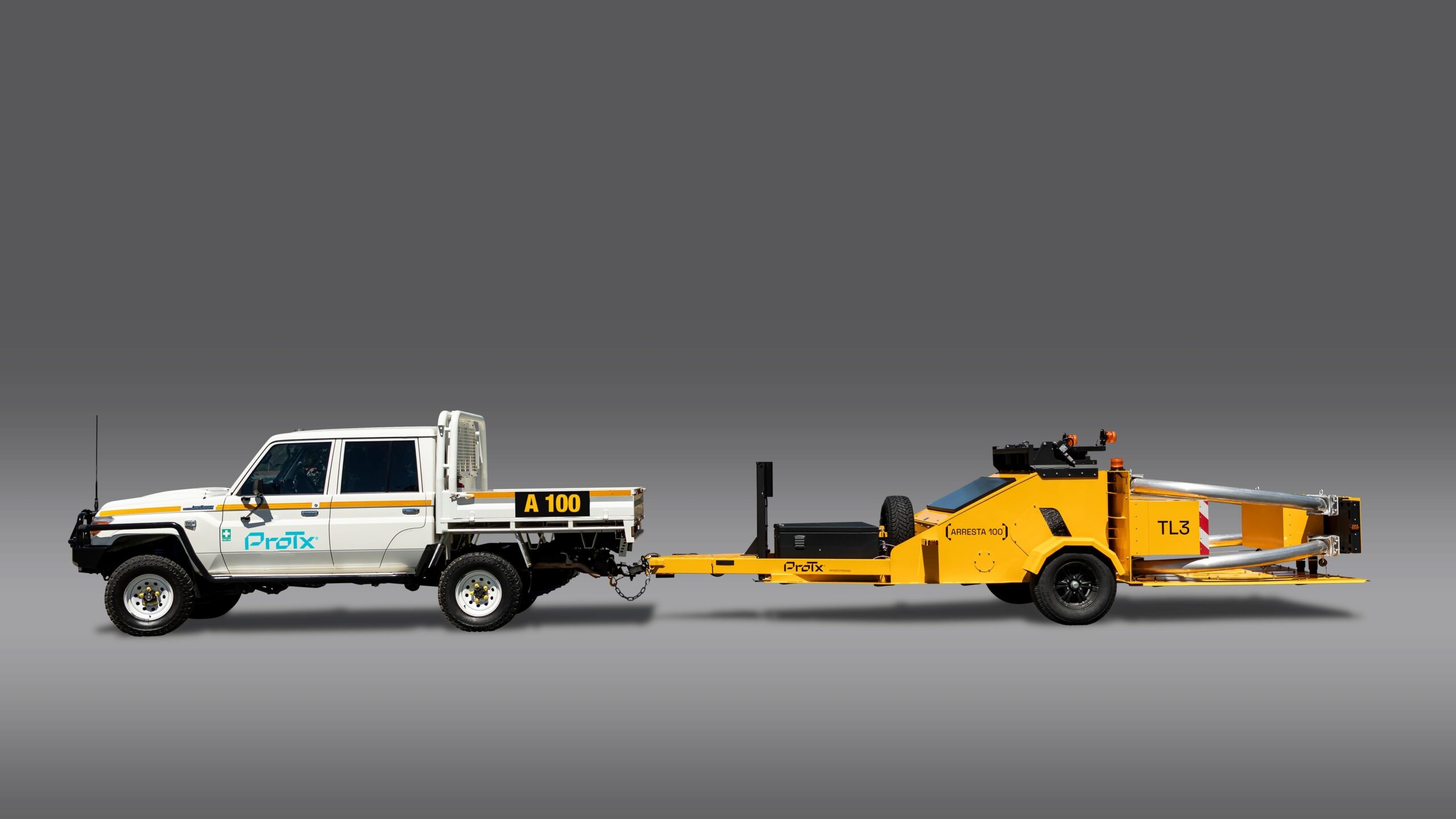

Tow Mode
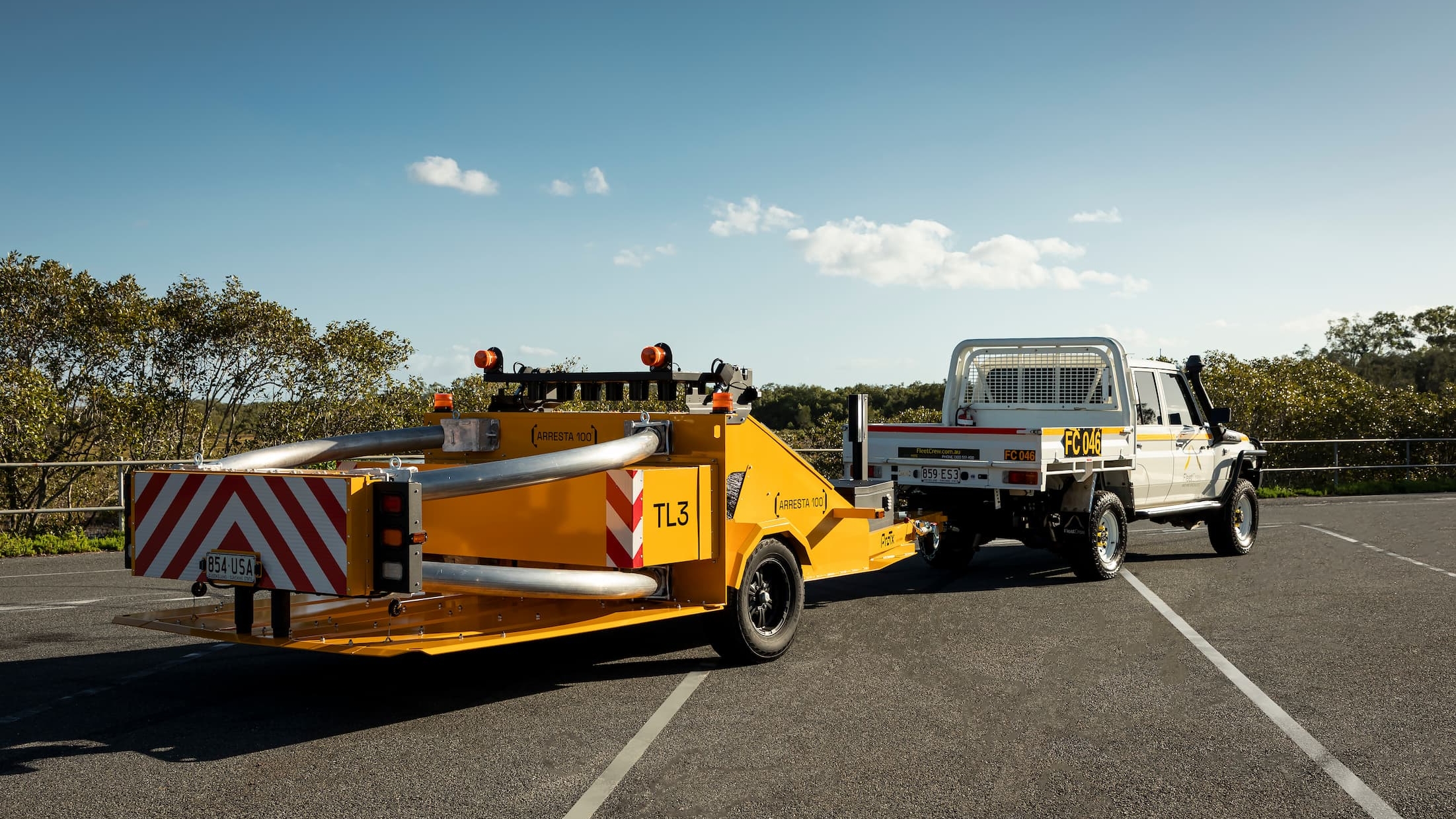
A registered road trailer
Light trailer — ATM 2,500kg, Tare Weight approx. 2,000kg. Within the towing capacity of a standard work ute. 50mm tow ball and electric brake controller. Road registered — tow anywhere, by anyone with a standard licence.
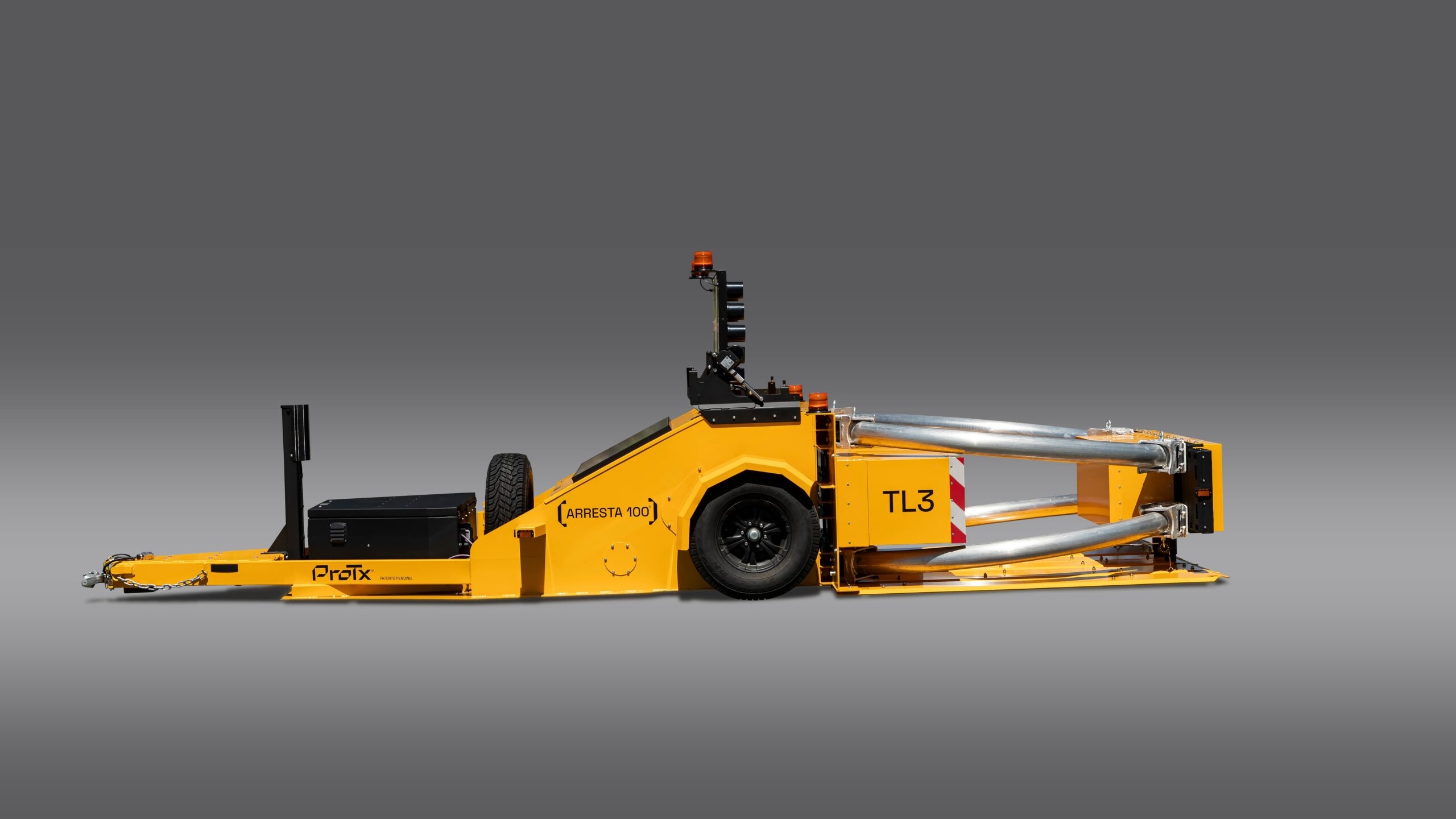
Deployed Mode
A crash-tested road safety barrier
MASH TL-3 tested. ASBAP approved. NSW and QLD accepted. No operator required once deployed.
Key Features
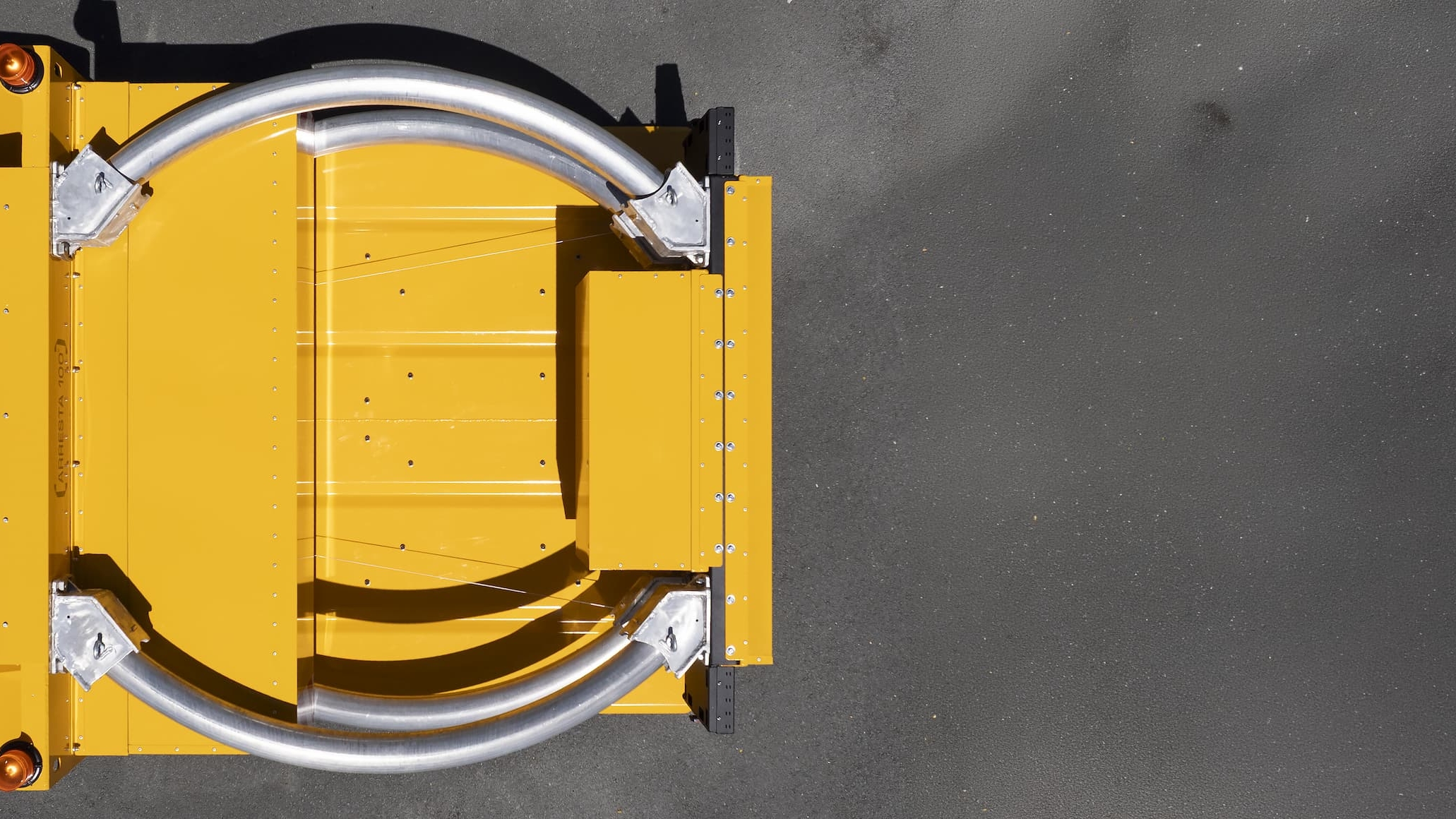
Reusable Cassette
Reusable Cassette
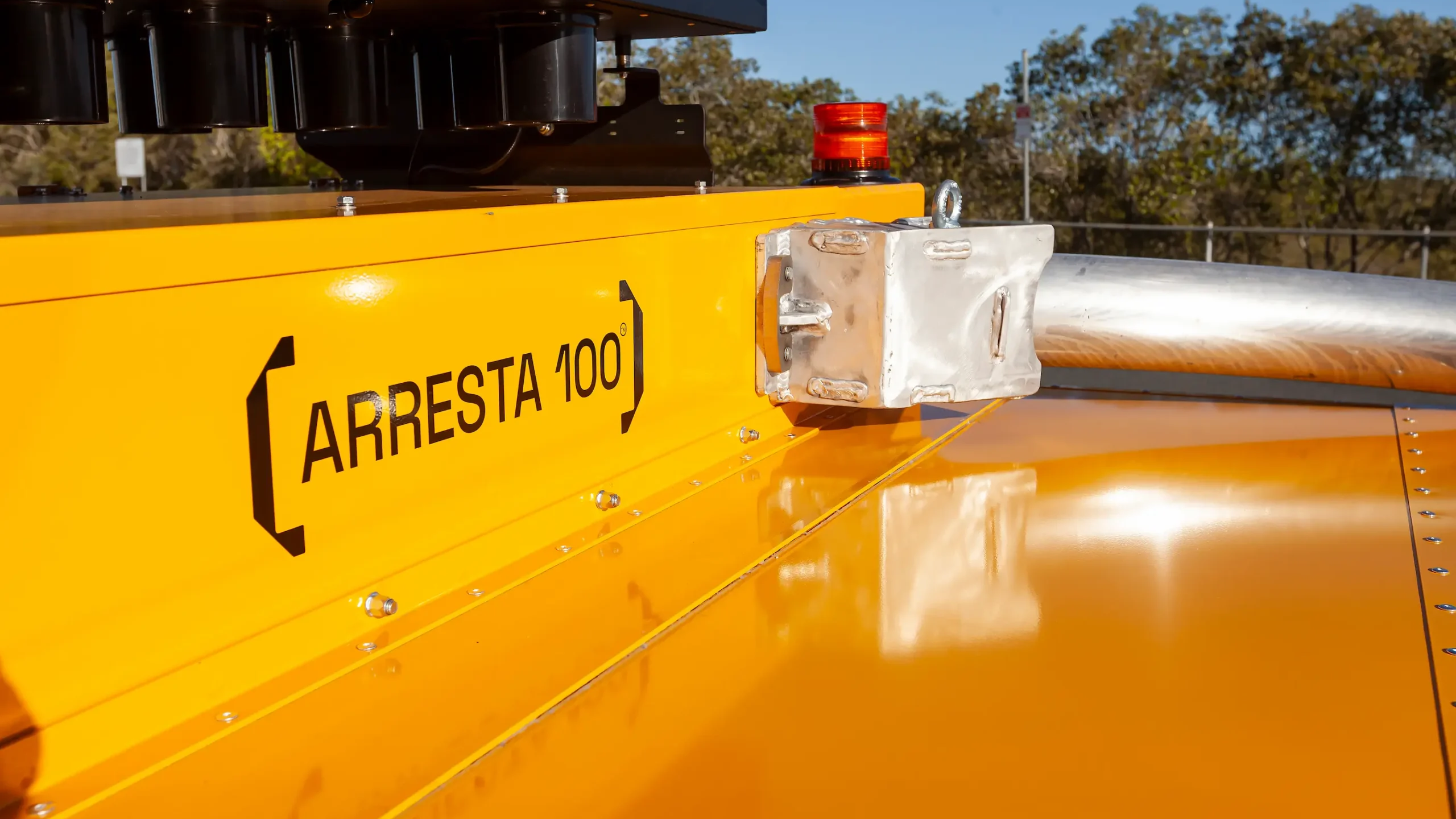
The Arresta 100 is built in two parts — a reusable main body and a sacrificial cassette. The cassette bolts on and off, absorbs the impact energy, and is the only part that needs replacing after a crash. One main body. Seven crash tests. Proven. Bolt on a new cassette and get back on the road quickly.
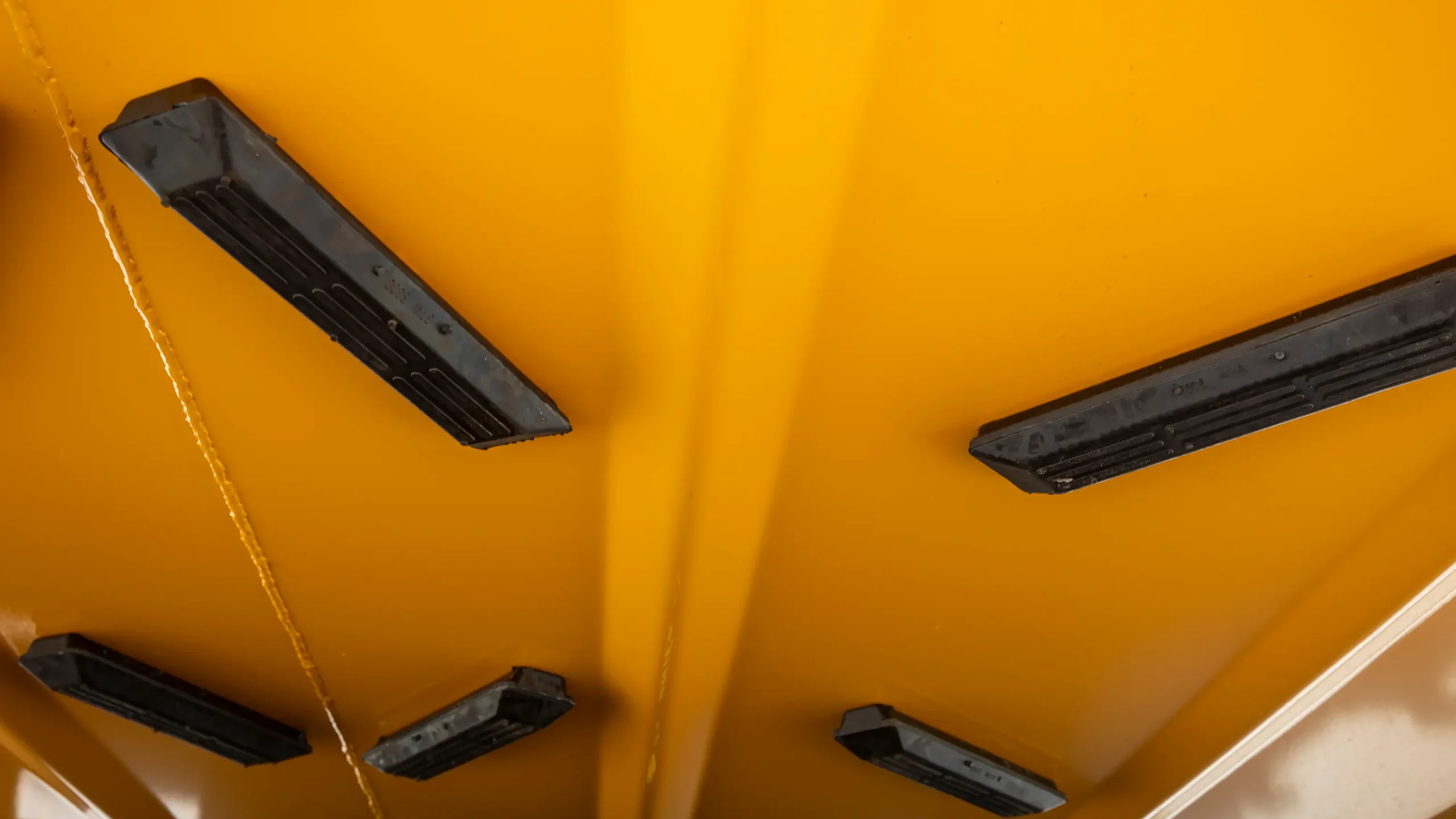
30X Rubber Feet
30X Rubber Feet
More than thirty individual rubber feet put significantly more rubber on the road than a four-wheeled vehicle. They spread the friction and load during the Arrest phase, keep the unit largely static during a vehicle strike, and accommodate variations in road surface — including pot holes and uneven surfaces.
Rear Floor Plate
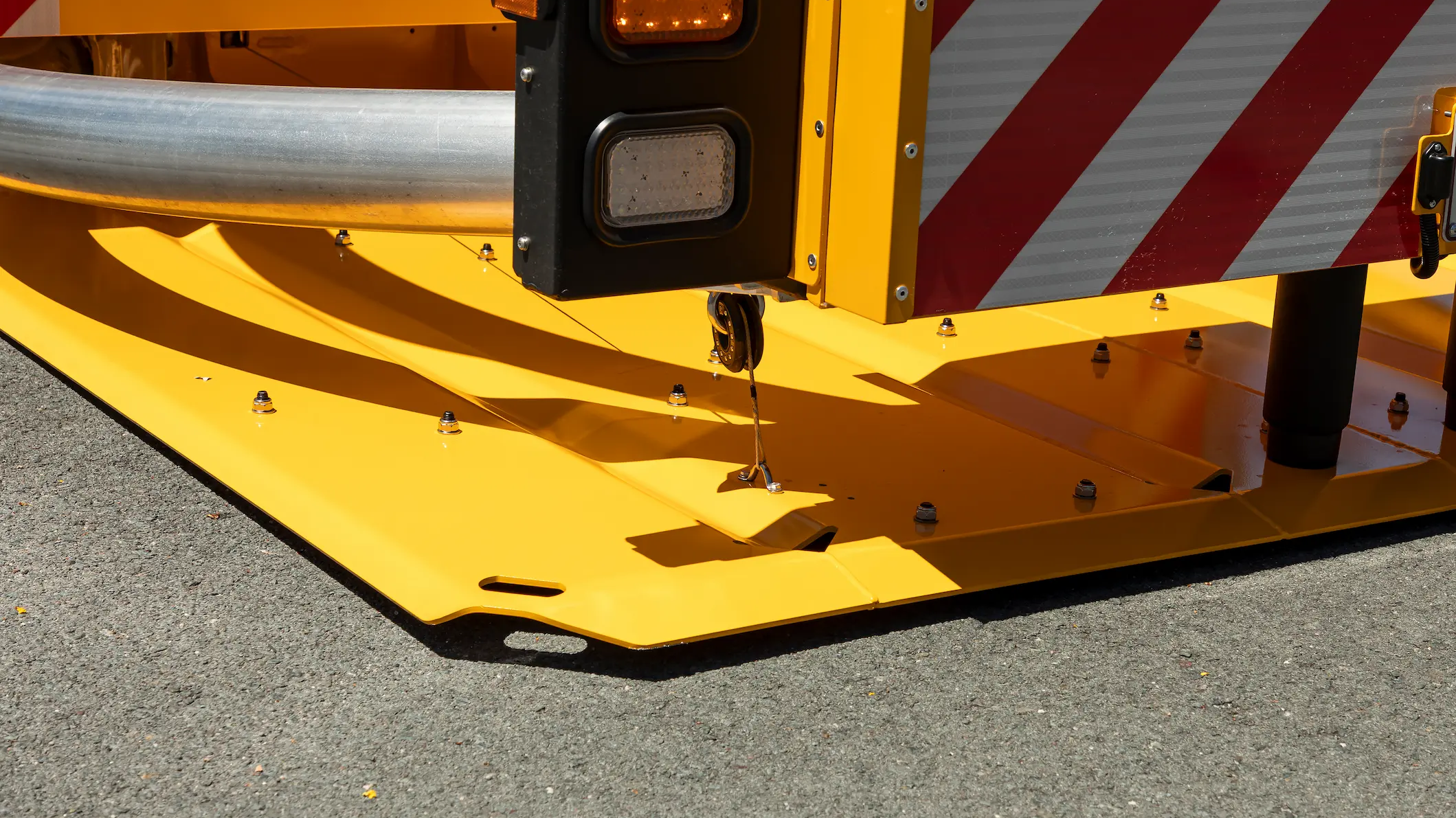
Rear Floor Plate
The rear floor plate sits flat on the road surface. When a vehicle strikes the Arresta 100, it drives up onto the plate — and the mass of the impacting vehicle itself becomes part of the arrest system. The heavier the vehicle, the greater the friction force.
Attenuation Control Measures
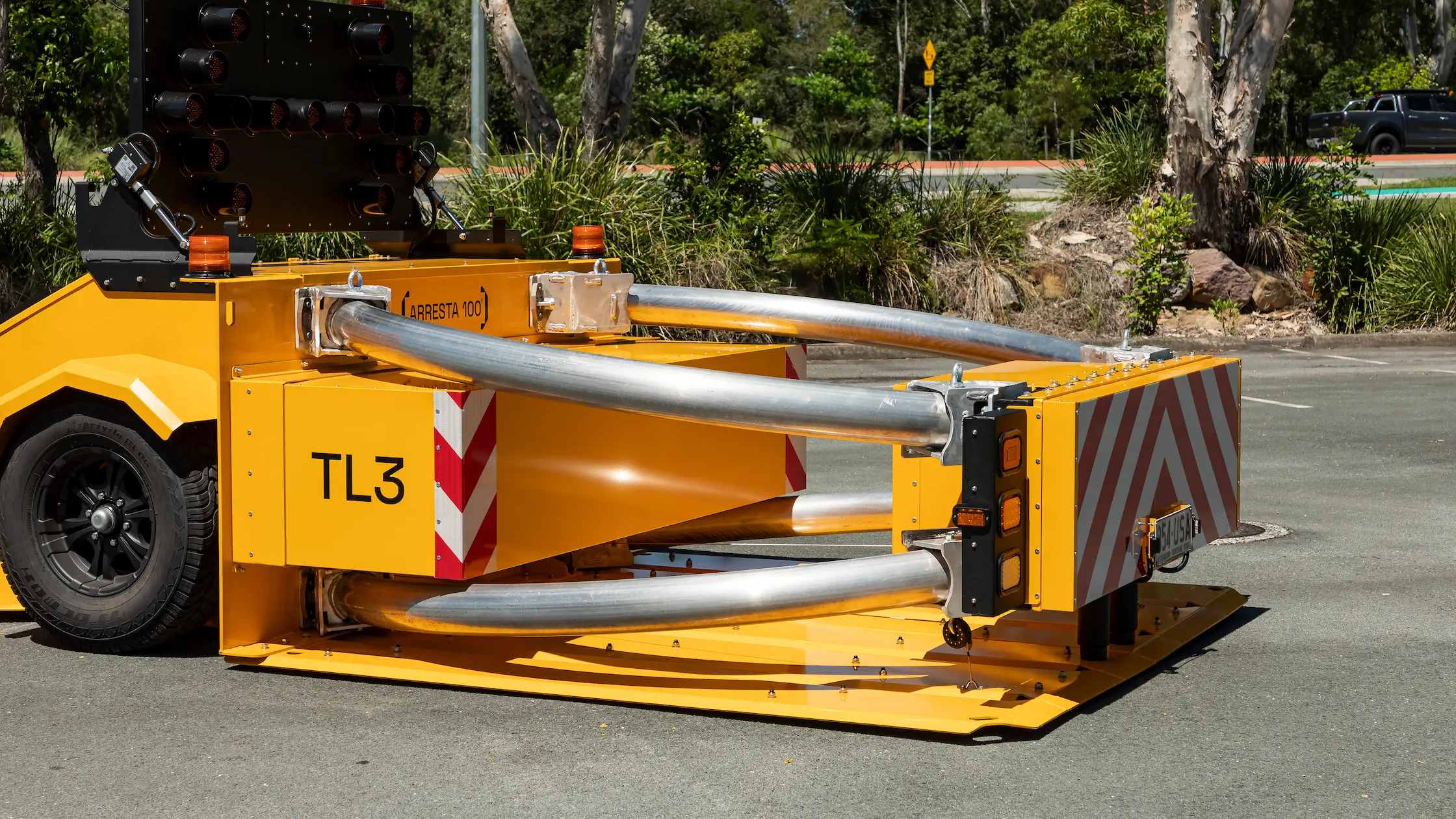
Attenuation Control Measures
Unique aspects of the cassette design — including angled crush tubes and a controlled tube end box — keep the attenuation centred during impact, support the impacting vehicle from above and below, and smooth vehicle deceleration. The result: controlled, predictable energy absorption across all MASH TL-3 tests.
Towing Safety & Ride Quality
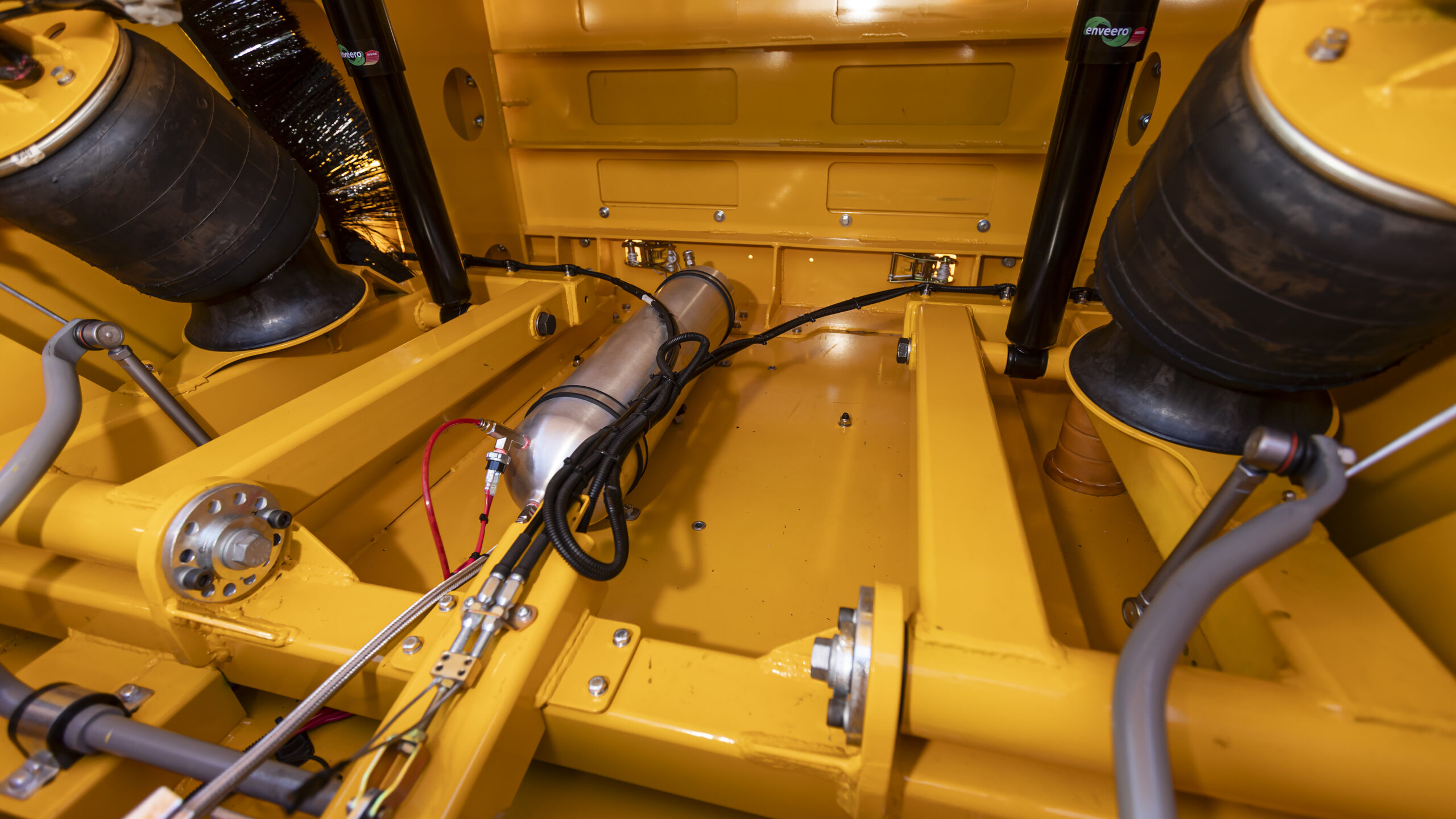
Towing Safety & Ride Quality
Airbag suspension delivers a smooth tow and protects cassette components on rough roads. AL-KO Sway Control is fitted as standard — continuously monitoring trailer movement and automatically dampening sway for safer highway towing.
Lithium Battery
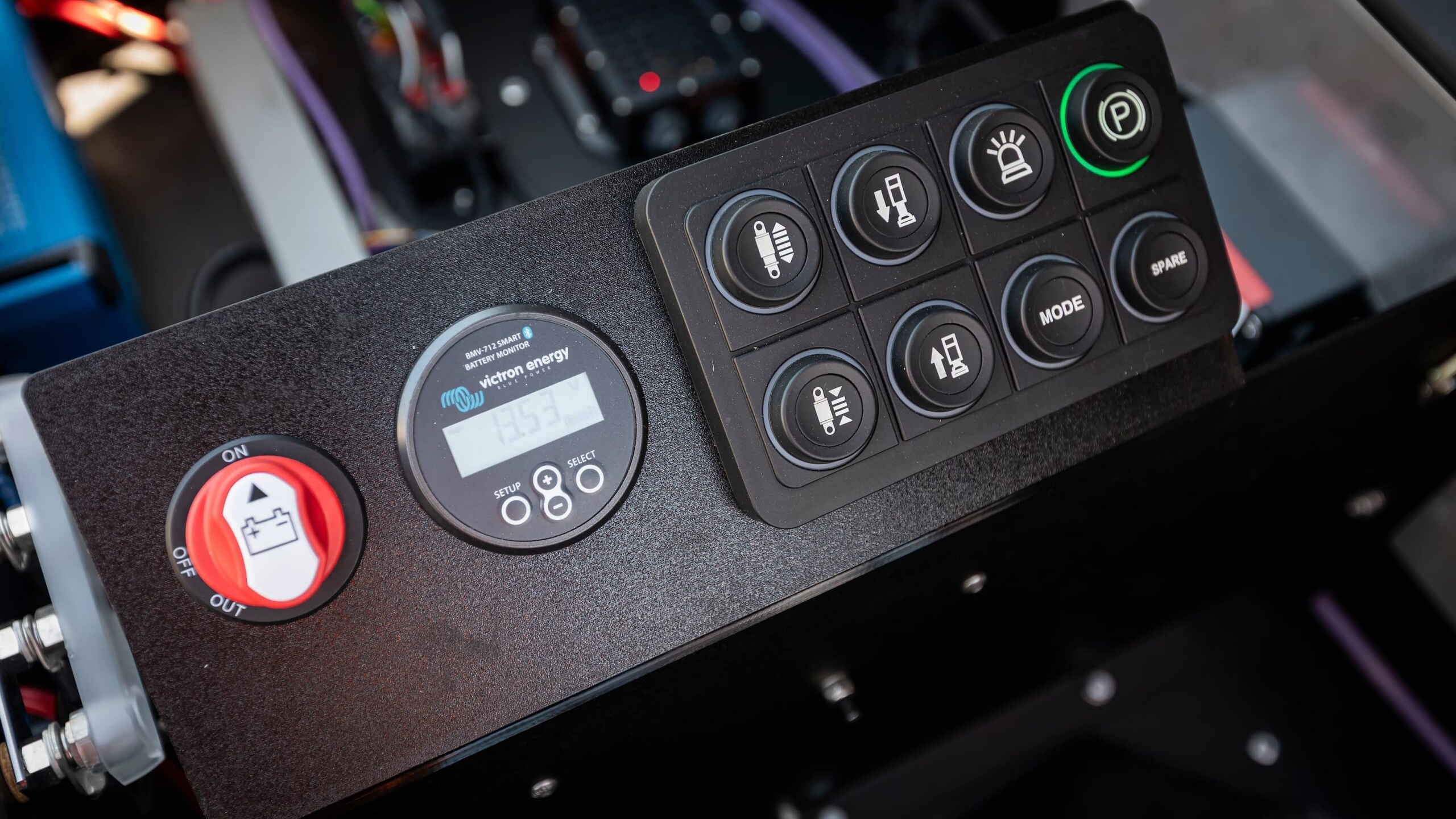
Lithium Battery
The Arresta 100 runs on a lithium battery with three charging options — solar, Anderson plug, or 240V. Charge how and where it suits you.

FAQ
The Arresta 100 is a purpose-built trailer vehicle arrestor designed to protect road workers at temporary static worksites — road maintenance, utility work, vehicle recovery, and emergency services. It’s towed to the site by a standard work ute, positioned in minutes, and requires no operator once deployed.
If you’ve seen a TMA on a highway job, the Arresta 100 may look familiar — but it works very differently. A Truck Mounted Attenuator (TMA) requires a large dedicated truck, a driver, and an operator to remain in the cab for the duration of the job. The Arresta 100 is different. It’s towed in with a standard work ute, positioned in minutes, and once deployed the crew moves away. Critically, no operator remaining in harm’s way once deployed.
No. Once the Arresta 100 is positioned, the crew is free to leave the immediate area and carry out their work. There is no requirement for an operator to remain in a vehicle or stand by the unit. This is one of the key differences from a TMA, and a major reason it’s practical for short-duration jobs.
The Arresta 100 is designed for temporary static works — short-duration jobs where a crew is stationary on or beside the road. This includes road maintenance, pothole repair, utility work, line marking, vehicle recovery, and emergency response. It is not designed for long-term construction sites (which use longitudinal barriers) or moving works (which use TMAs).
Yes. The Arresta 100 has passed MASH TL-3 crash testing (Level 3, 100km/h, tests T.50 through T.53) and has received ASBAP Crashworthiness Assessment (CA) approval. It is currently accepted for use in New South Wales and Queensland, with other states and territories in progress.
No. Once the Arresta 100 is positioned, the crew is free to leave the immediate area and carry out their work. There is no requirement for an operator to remain in a vehicle or stand by the unit. This is one of the key differences from a TMA, and a major reason it’s practical for short-duration jobs.
ProTx — P-r-o-T-x. All about protection. Pronounced as Pro-Tecs. You might see it incorrectly searched as Protex, but ProTx is the brand. It’s in our name — ProTx protects.
No — though the comparison is understandable. The Arresta 100 is a different technology — a vehicle arrestor, not a trailer mounted attenuator. The trailer aspect of the design is simply how the device is transported to and from the worksite. Once in position, it is disconnected from the tow vehicle, and the tow vehicle and driver move away. Drop & go. This is a fundamental difference from any truck or trailer mounted attenuator.
In Summary
Effective Protection
Provides proven protection for both workers and vehicle occupants.
Operator Safety
No operator is required to remain in the vicinity once deployed.
Rapid Deployment
Set up and pack away in just minutes.
Cost-Effective Solution
Significant cost savings, using existing workers and standard work vehicles and utes.
Sustainable Design
Maximised re-use after crash impact with fast repair time to get it back on the road quickly.
Technical Specs